
Earlier this month, I had the pleasure of presenting the Coach of the Year Female Pathway Award to Sara Fahad at the London FA Awards.
I knew very little about Sara before that evening. But after meeting her, I wanted to know more about the person behind the award and what had led her to that stage.
So this week, I sat down with her for a chat and I came away feeling slightly exhausted just listening to everything she manages to fit into her life!
Sara is 27. She’s a mum of three children, aged eight, six and one. She’s completed a degree in Sport and Exercise Science and, more recently, a Master’s in Human and Applied Physiology at King’s. She’s currently working towards her UEFA B licence, is head coach across several teams and clubs, has recently started coaching with Leyton Orient’s Emerging Talent Centre and has been selected as one of just 10 coaches for an FA Mentee Development Programme.
Her ultimate dream? To coach in the Premier League.
But actually, it wasn’t the list of achievements that struck me most. It was the amount of work sitting behind them. Sara has loved football since she was five years old. And I mean really loved it. She told me that as a child she would sleep with a football. She’d have one at her feet while brushing her teeth. She’d play in the street, at school, in the local cage, with boys, with adults, with pretty much anybody who would play with her.
At a time when there were far fewer opportunities for girls in football, she simply found a way to keep playing, quite simply, because she wanted to. It made me wonder whether, when it comes to participation, we sometimes place too much emphasis on the barriers to entry.
If someone has a real passion for a sport, will they simply find a way to play regardless? That same attitude seems to have followed her through life.
When we started talking about how she possibly combines coaching, studying, travelling and developing her career with raising three young children, she said something incredibly simple:
“I don’t know. I just want it, so I do it.”
That stayed with me.
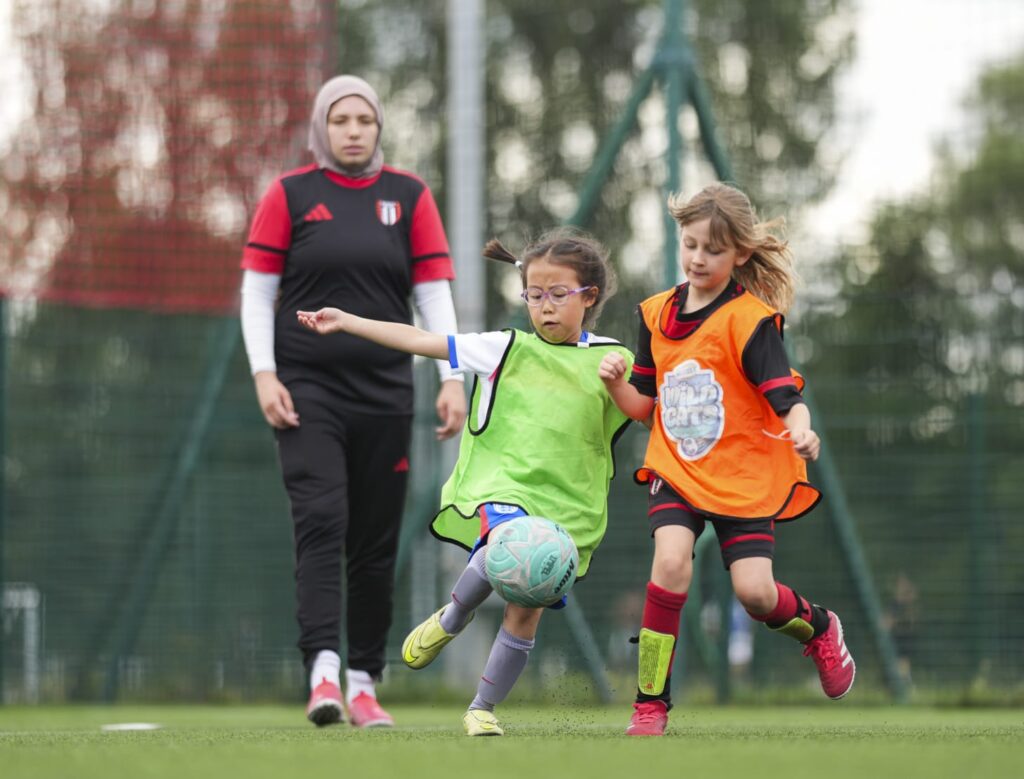
Because Sara certainly isn’t pretending it’s easy. She talked about working hard to find the right balance, being strategic about taking coaching roles close to home and having a supportive husband who comes home from work and effectively tags in with the children as she heads out to coach.
There is sacrifice. There is organisation. There is support. And I suspect there are some very long days. But there is also an enormous amount of passion. At one point Sara said people often tell her that “we can’t have it all.” Her response was:
“But why can’t we have it all? Why can’t I be a mum who’s present and also have a career in something that I’m passionate about?”
I loved that.
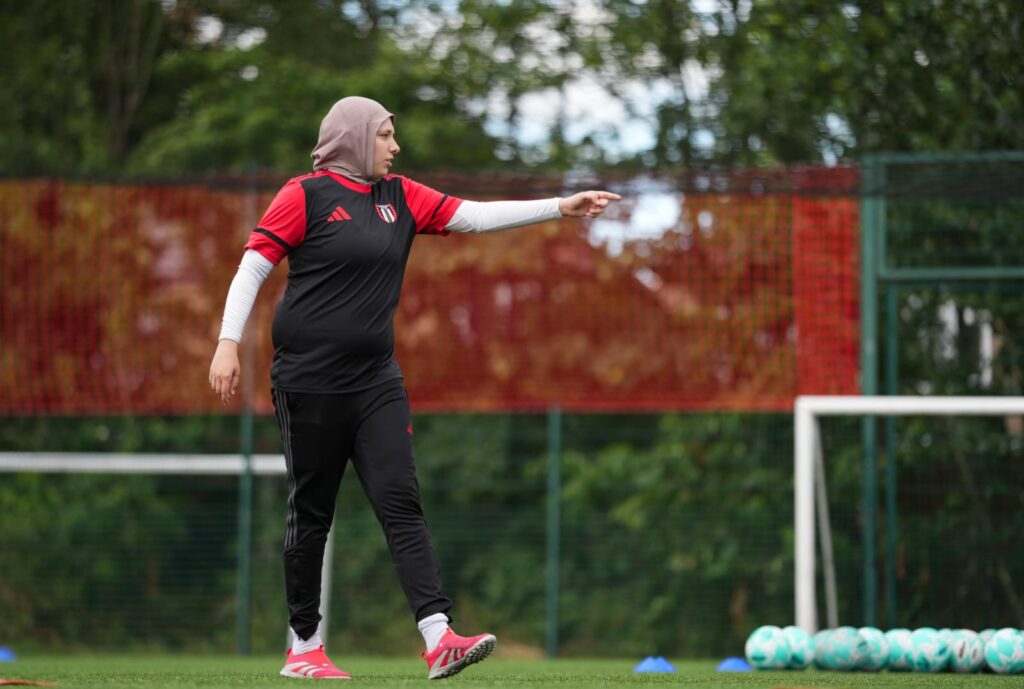
Not because I think everyone should fill every spare second of their lives with more work. Far from it. But because there is something incredibly powerful about meeting someone who has decided what matters to them and is prepared to put the work in to pursue it.
There was another part of Sara’s story that really resonated with me too.
Growing up, she didn’t have the pathways that many young female footballers have today. She remembers being good enough to stand out at school but teachers simply not knowing where to send her. She trained with boys but wasn’t always allowed to play matches. There weren’t girls’ teams everywhere, academies weren’t an obvious route and even her parents didn’t really know what opportunities existed.
Today, Sara is helping to create the environment she didn’t have herself.
She talked passionately about the responsibility coaches have not just to develop sporting ability, but to build confidence, create safe spaces and make young people feel that somebody genuinely cares whether they continue.
That really struck a chord with me after spending so many years working with coaches across sport.
A great coach does so much more than teach a sport.
They can be the person who builds confidence when it’s disappearing. The person who makes somebody feel they belong. The person who keeps a teenager involved at the point when they might otherwise walk away.
Sara is particularly conscious of this with girls, having seen teams struggle to retain players as they reach their teenage years. She wants the girls she coaches now to know that they belong in football and that there is a pathway available to them.
In many ways, that feels like the perfect circle.
The five-year-old girl who just wanted to play football, despite there being very few obvious places for her to do it, is now helping another generation of girls see just how far football could take them.
I presented Sara with an award for coaching.
After spending 36 minutes talking to her, I understood exactly why she’d won it.
And I have a feeling this is still only the beginning of her story.
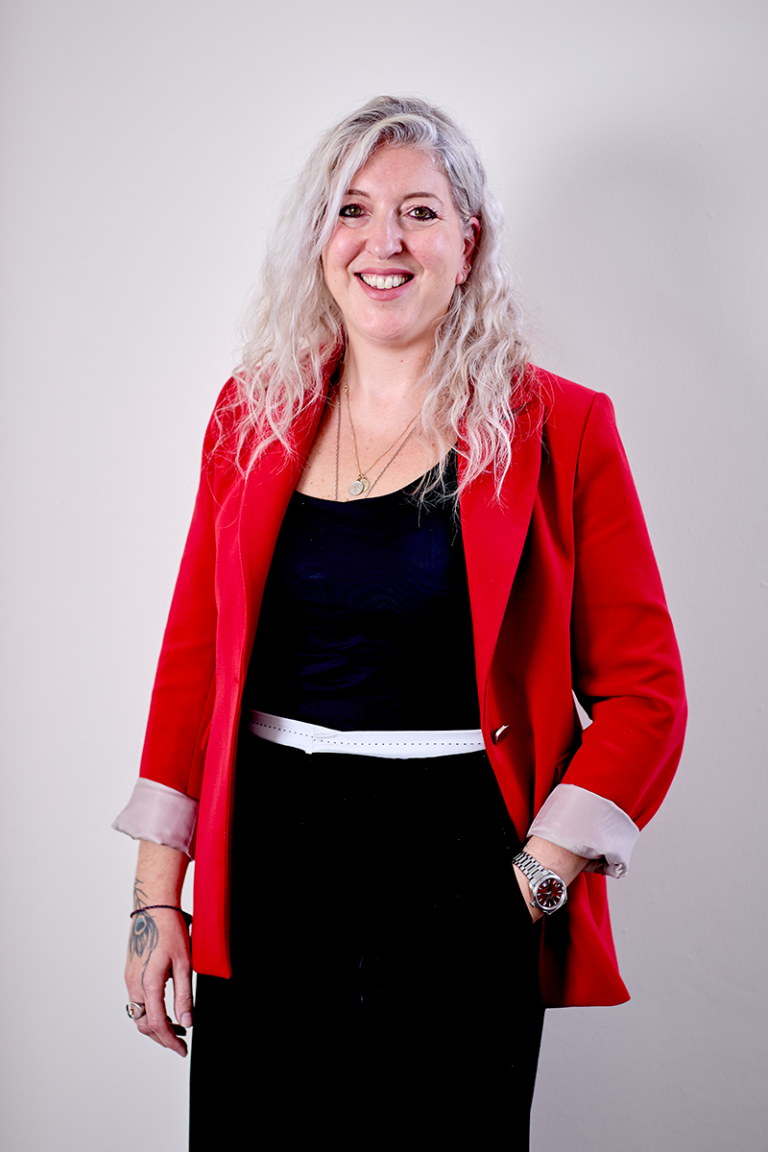
About the author
Louisa Turchet
Director of Sales and Marketing, NEST Management
Louisa is Director of Sales and Marketing at NEST Management, where she helps martial arts clubs and sports organisations spend less time on admin and more time on the people they coach. She’s spent years working alongside coaches across sport and loves sharing the stories behind them.